The Drop: Gun fight rules are conventional wisdom, not doctrine. The lists worth knowing are the USMC rules, the 13 rules of gunfighting from concealed carry instructors, and the anonymous “Rules for a Gunfight” floating around since the early 2000s. The first rule of every serious list is the same: have a gun, and bring one that works every time. Most civilian gunfights are over in about three seconds, at three yards, with three shots fired, so movement, cover, and using cover correctly matter more than your shooting stance. Watch the hands, because hands kill. Dueling is illegal in all 50 states, no matter what either party agreed to. The five basic gun safety rules (treat every firearm as loaded, muzzle in a safe direction, finger off the trigger, know your target and what is behind it, know your gun) are the foundation underneath all of it. Avoidance, deterrence, and de-escalation are still your number one option for personal security.
Most lists of gun fight rules read like fortune cookies for tough guys. A handful of them, though, hold up. They survived because real shooters and combat veterans kept passing them around campfires, locker rooms, and forums for decades, dropping the parts that did not work. This article walks through the famous rule sets (the USMC list, the 13 rules of gunfighting, and the anonymous “Rules for a Gunfight”), answers the questions people actually ask, and explains what to take seriously and what to read for the laugh. I have spent years training combat sports and watching the OSINT side of self-defense from down here in rural Mexico, and the stuff worth keeping is shorter than you think.
Where Do These Gun Fight Rules Actually Come From?
Most of the lists you see online are mash-ups. The famous “Rules for a Gunfight” floating around since the early 2000s is credited to “Anonymous” because nobody can prove who wrote it first. The USMC version is similar, with extra jokes about CentCom and the Air Force tacked on by some bored Marine with a keyboard. The “13 rules of gunfighting” most people quote came from CJ Grisham, an Army veteran and concealed carry instructor, and got picked up by Business Insider and the Thomas More Law Center.
None of these are doctrine. The Marine Corps does not hand out a laminated card with these on it. Think of them as conventional wisdom, sharpened by people who have been in the fight or trained the people who have. They are still useful. Just know what you are reading.
What is the first rule of gunfighting?
The first rule of gunfighting is have a gun. Every serious list opens with that line, and it is not a joke. A gun fight you do not bring a gun to is just a beating. The follow-on, repeated by trainers from Jeff Cooper to modern instructors, is to bring a gun that works every time. A gun that works every time beats a fancier gun that fails when the click matters more than the bang.
The deeper point sits underneath the obvious one. Carrying is a decision you make at breakfast, not at the moment of the incident. If your firearm is in the safe at home when an attacker steps out from behind a parked car, your training, your stance, and your caliber do not matter. The first rule is really about commitment. Once you accept that someday someone may kill you if you let them, the rest of the rules start to make sense.
The Marines’ 13 Rules (and the Full USMC Rules) for Gun Fighting
The “marines 13 rules to a gun fight” is shorthand for a longer satirical list that has been circulating in military forums since at least 2007. It is funny, it is cynical, and most of it is correct. Here is the cleaned-up version of the most-shared rules, in plain English:
- Bring a gun. Bring two if you can. Bring friends with guns.
- Anything worth shooting is worth shooting twice. Ammo is cheap, life is expensive.
- Only hits count. Close does not.
- If your shooting stance is good, you are probably not moving fast enough or using cover correctly.
- Move away from your attacker. Distance is your friend. Lateral and diagonal movement are preferred.
- If you can choose, bring a long gun and a friend with a long gun.
- In ten years nobody will remember caliber, stance, or tactics. They will only remember who lived.
- If you are not shooting, you should be communicating, reloading, and running.
- Accuracy is relative. Most combat shooting standards will be more dependent on pucker factor than the inherent accuracy of the gun.
- Use a gun that works every time. All skill is in vain when an angel blows the powder from the flintlock of your musket.
- Someday someone may kill you with your own gun, but they should have to beat you to death with it because it is empty.
- Always cheat, always win. The only unfair fight is the one you lose.
- Have a plan. Have a backup plan, because the first one will not work.
The longer USMC list keeps going through 27 entries with notes about flanking, tactical reloads, scanning 360 degrees, and the famous Watch their hands. Hands kill line. The Army version of the rules, in classic Marine humor, just says “see USMC rules, add 60 to 90 days, hope the Marines already destroyed all meaningful resistance.”
The Other Famous 13 Rules of Gunfighting
The other “13 rules” you will run into came from concealed carry instructors and got attributed to CJ Grisham. It overlaps with the USMC list but leans more civilian. The keepers, paraphrased:
- Have a gun. Carry it.
- Guns have only two enemies: rust and politicians.
- It is better to be judged by twelve than carried by six.
- Cops carry guns to protect themselves, not you. The average 911 response is around 23 minutes.
- Never let a threat get inside arm’s length.
- Never announce that you have a gun. If you need deadly force, the first sound the attacker hears should be the safety clicking off.
- The most important rule in a gun fight: always win. Cheat if you have to.
- Make your attacker advance through a wall of bullets. He may kill you with your own gun, but he will have to beat you to death with it because it will be empty.
- If you are not shooting, you should be loading. If you are not loading, you should be moving.
- In a life-and-death incident, do something. It may be wrong, but do something.
- A large bore muzzle pointed at someone’s head is a universal language.
- You cannot save the planet, but you may be able to save yourself and your family.
- Peace is the brief moment everyone stands around reloading. (Apocryphally Jefferson, almost certainly not Jefferson.)
Same energy as the USMC version, more focused on the everyday concealed carrier.
The Anonymous “Rules for a Gunfight” That Just Will Not Die
There is a third list, usually titled simply “Rules for a Gunfight,” credited to Anonymous and hosted on a thousand 1911 forums. It is the one that contains the polite but professional line, “Be polite. Be professional. But have a plan to kill everyone you meet.” That phrase is widely attributed to General James Mattis, who used a version of it with Marines in Iraq. The list also includes warnings against handguns whose caliber does not start with a 4, which is a fun argument to start at any range parking lot.
The substance worth keeping from this list is the same substance worth keeping from the others. Use cover or concealment. Watch the hands. Reload before you are empty. Move. The rest is flavor.
What are the 5 basic gun safety rules?
Gun safety is a separate discipline from gun fighting. You can lose a gunfight because you were unsafe with your firearm long before the threat ever showed up. The five basic gun safety rules taught by NRA, USCCA, and most reputable instructors are:
- Treat every firearm as if it is loaded. Always. No exceptions, even when you “know” it is empty.
- Always point the muzzle in a safe direction. Never let it cover anything you are not willing to destroy.
- Keep your finger off the trigger until you are ready to shoot. Off the trigger means indexed straight along the frame.
- Know your target and what is behind it. Bullets do not stop at the bad guy. They keep going through walls, cars, and bystanders.
- Know your firearm. Know how it works, how to load and reload it, how to clear malfunctions, and what condition it is in.
Some instructors, including Jeff Cooper’s original framework, list four. Others add a sixth about hearing and eye protection on the range. The exact count matters less than burning the principles into muscle memory. A safe shooter under stress is a competent shooter under stress. A careless one becomes the news.
How long do most gunfights last?
Most civilian gunfights are over in seconds. The “rule of threes” taught in most defensive shooting courses says civilian incidents tend to involve roughly three shots, at about three yards, lasting about three seconds. FBI data on officer-involved shootings tracks similar numbers, with the majority resolving inside five seconds and inside seven yards. That is shorter than the time it takes most people to read this paragraph.
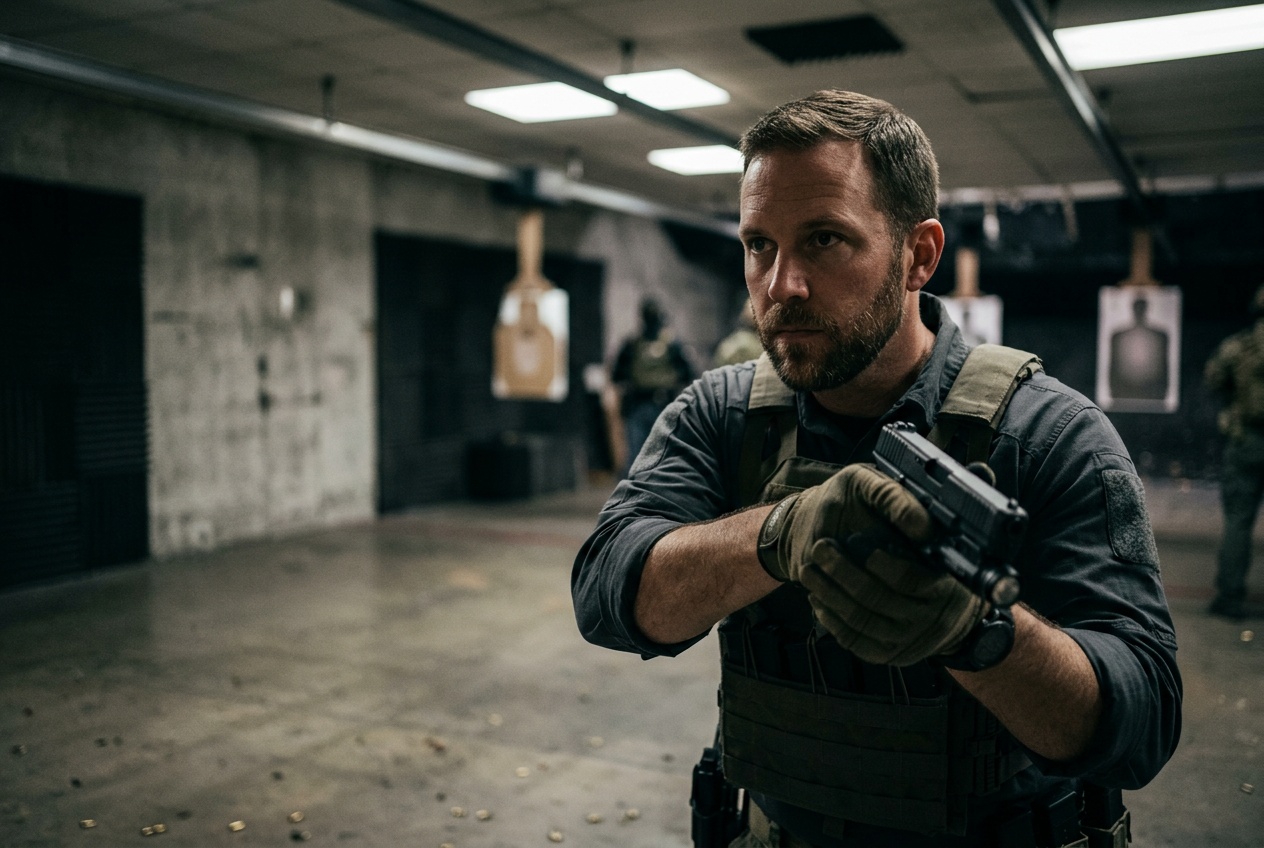
What that means for training is straightforward. You will not have time to think. You will not have time for a perfect Weaver stance and sight picture. You will draw, point, hit or miss, move, and either survive or you will not. This is why every honest list of rules tells you to train like the fight will be fast, ugly, and close. Drill the draw. Drill the first two shots. Drill movement off the line. The gunfighting the movies show you, with cover behind dumpsters and witty banter, is not the gun fight that comes for you in a parking lot at 11 p.m.
Why Movement, Cover, and Concealment Beat Your Shooting Stance
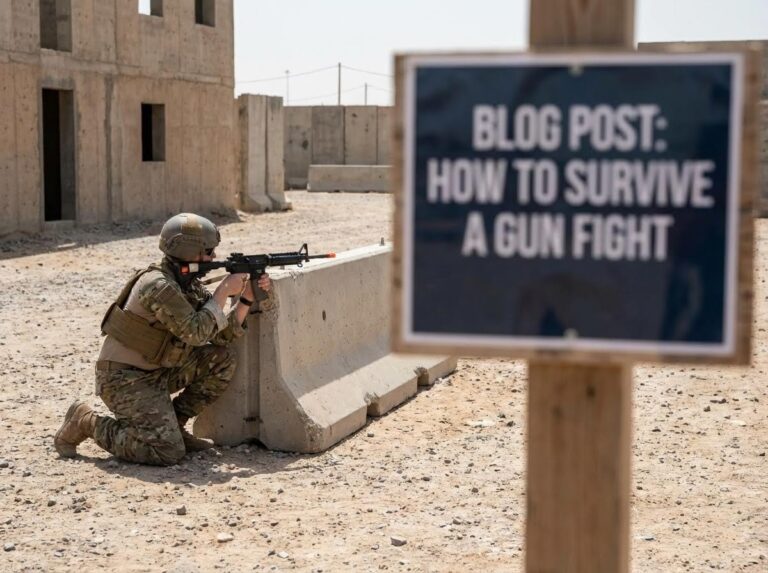
Almost every list ranks movement and cover above marksmanship for a reason. A standing target on a square range is the easiest thing in the world to hit. A moving target behind a concrete pillar is one of the hardest. If your shooting stance is good, you are probably not moving fast enough. Lateral and diagonal movement matter more than how you grip the pistol.
Cover stops bullets. Concealment only hides you. Drywall, cubicle walls, and most car doors are concealment, not cover. An engine block, a brick column, or a poured concrete planter is cover. Knowing which is which is the kind of thing you build in training, not in a parking lot at 11 p.m. Combine cover with movement and you have made yourself a problem an attacker did not sign up for. That is the entire point of using cover correctly.
Is it legal to have a gun duel?
No. Dueling is illegal in all 50 U.S. states. Most states either have specific anti-dueling statutes left over from the 1800s or simply prosecute it under standard homicide and assault laws. Consent does not make it legal. Two people agreeing to shoot at each other does not change the fact that one of them is committing aggravated assault or murder when they pull the trigger. A few states even have provisions in their constitutions barring duelists from holding public office, which is a fun piece of trivia you can pull out at a barbecue.
Mexico, where I live, takes a similar view. Carrying a firearm without a federal permit is already heavily restricted, and any kind of agreed-upon armed exchange would be charged as homicidio. The romantic image of pistols at dawn died with the 19th century. If someone challenges you to a duel, the legal answer is to call the police and the practical answer is to walk away. The de-escalation is always cheaper than the trial.
Water Gun Fight Rules for the Backyard
For the lighter side of “gun fight rules,” there is the water gun fight, the only kind your kids should ever be in. The standard backyard water gun fight rules most families use:
- No headshots at close range. Eye safety matters.
- No filling water guns with anything other than water. No ice, no soap, no surprises.
- Out-of-bounds is whatever the adults say it is.
- Once you are soaked through, you are out for the round.
- No ambushes during bathroom breaks. Some things are sacred.
Set a perimeter, set a time limit, and let chaos do the rest. The same principles of cover, concealment, and movement apply, just with no consequences worse than a wet shirt.
The Mindset Behind Every Rule
Strip away the jokes and every serious list says the same thing in different words. Your number one option for personal security is a lifelong commitment to avoidance, deterrence, and de-escalation. Awareness of your surroundings beats every drill in the book. Watching their hands beats reading their face. The fight you do not have to be in is the fight you always win.
The importance of mindset is hard to overstate. Carry a firearm if it is legal where you are and you have trained with it. Watch the hands. Do not draw down on people who are walking away. Decide to be aggressive enough, quickly enough, only when there is no other option left. Force is the last tool, not the first one. The people I trust most around guns are the ones least eager to use them.
What to Take Away From All of This
The lists are entertaining. The principles underneath are what keep you alive. Worth burning in:
- Always carry a gun that works every time, and train with it enough that you trust it under stress.
- Move. Lateral and diagonal movement are preferred over standing still and shooting pretty.
- Use cover, not concealment, when both are available, and know the difference.
- Watch their hands. Hands kill, not faces.
- Most gunfights are over in seconds, at close distance, with few shots fired. Train accordingly.
- Avoidance, deterrence, and de-escalation come before the firearm comes out.
- The rules of a gunfight are conventional wisdom, not doctrine. Take what works, drop what does not, and keep training.
The rules that survived this long survived for a reason. The shooters who internalized them are mostly the ones still around to repeat them.
About the Author