Nobody in their right mind wants to find themselves in the middle of a gunfight. However, if your EDC includes a firearm or work in law enforcement, knowing survival principles is essential. The difference between going home safe and soubd versus becoming a statistic often boils down to preparation, mindset, and quick decisions under intense stress. This article covers the key tactics, mental strategies and practical skills that can seriously improve your chances of surviving a dangerous encounter.
The Survival Mindset: Your Most Powerful Weapon
Your gun isn’t your primary weapon. Your mind is.
Mental preparation determines how you’ll respond when bullets start flying. People who survive gunfights share one critical trait: they’ve already fought the battle in their mind dozens of times before. This mental rehearsal creates neural pathways that allow you to act decisively when your conscious mind is overwhelmed by adrenaline and sensory overload.
Winning mindset starts with accepting reality. You could die. Accept this fact now, not when someone’s pointing a gun at your chest. Once you’ve made peace with mortality, fear loses its paralyzing grip. You can think. You can move. You can fight back.
Develop what law enforcement trainers call “positive visualization.” Regularly imagine yourself successfully handling a deadly threat. See yourself moving to cover, drawing smoothly, making accurate hits, and surviving the encounter. Your brain doesn’t fully distinguish between vivid mental practice and physical repetition. This isn’t wishful thinking—it’s combat preparation.
Situational Awareness: Seeing Danger Before It Sees You
Most gunfights are avoidable. The best fight is the one you don’t have.
Situational awareness means constantly scanning your environment for threats. Jeff Cooper’s Color Code system provides a practical framework. Condition White means you’re oblivious—scrolling your phone, completely unaware of surroundings. This gets people killed. Condition Yellow is relaxed alertness—you’re aware of people around you, exits, potential threats, and anomalies. You should live here.
Condition Orange means you’ve identified a specific potential threat. That guy watching you from across the parking lot. The car that’s followed you for three turns. Your focus narrows. You develop a plan. Condition Red means the threat is immediate and you’re taking action.
Learn to identify pre-assault indicators. These behavioral cues often precede violence: target glancing, hands hidden or checking waistband, scanning for witnesses or cameras, pacing or aggressive posturing. When you see these signs, create distance and prepare to respond.
Trust your instincts. If something feels wrong, it probably is. That uncomfortable feeling is your subconscious detecting patterns your conscious mind hasn’t processed yet. Don’t ignore it to avoid seeming paranoid. Leave the area. Take a different route. Better embarrassed than dead.
Get to Cover: Your First Priority When Shots Are Fired
When a gunfight starts, standing still is suicide.
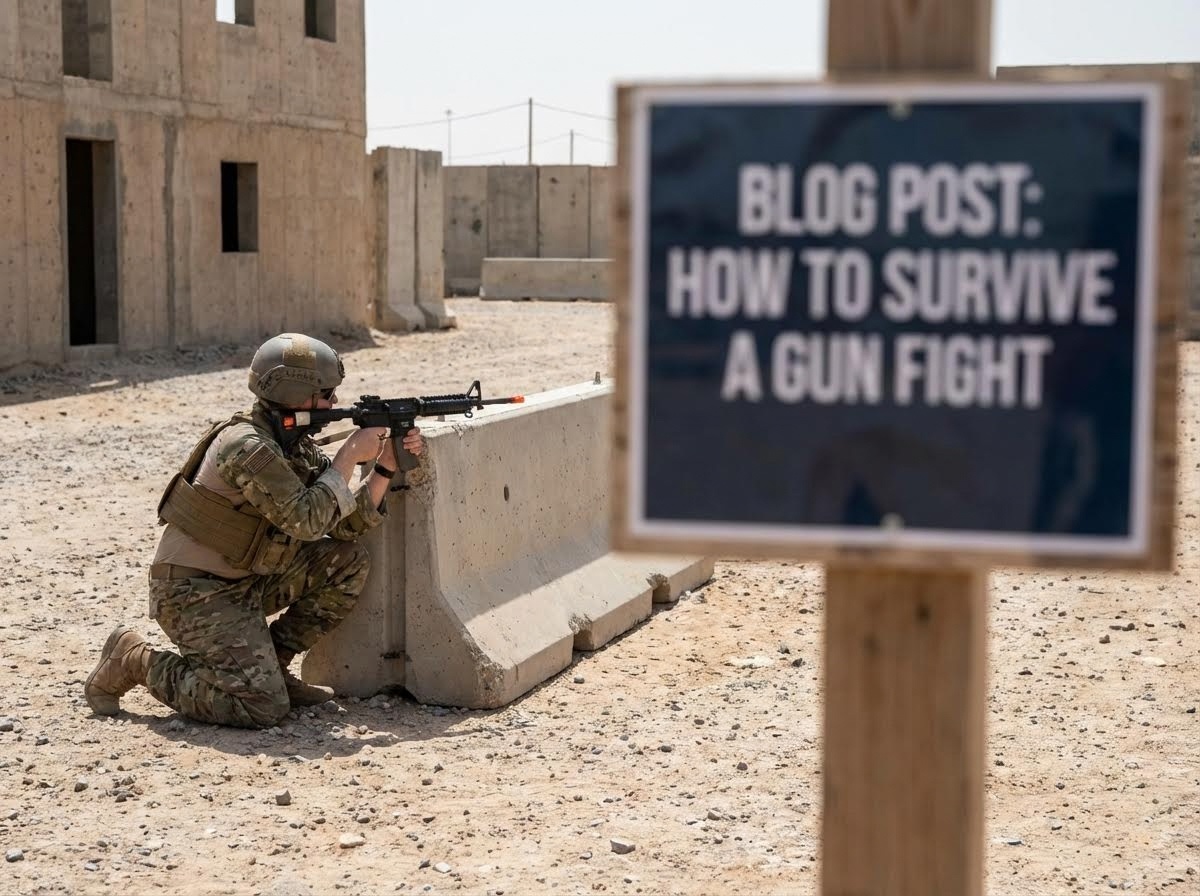
Your immediate priority is getting something solid between you and the threat. Not concealment—cover. Concealment hides you but won’t stop bullets. A bush is concealment. A brick wall is cover. The difference matters when rounds are incoming.
Good cover stops bullets: concrete walls, thick trees, engine blocks, filled dumpsters, brick pillars. Questionable cover might stop some rounds: car doors (especially if you’re behind the door and wheel well), thick wooden furniture, commercial refrigeration units. Bad cover stops nothing: drywall, car windows, residential doors, sheet metal.
Move to cover aggressively and unpredictably. Don’t run in a straight line. Use lateral movement. Zig-zag if distance allows. A moving target is exponentially harder to hit than a stationary one, especially under stress when fine motor skills degrade.
Once behind cover, don’t stay in one place. Shooters learn to “shoot through” cover, firing multiple rounds at where they last saw you. If you must engage from cover, shoot and move to a different position. Don’t pop up in the same spot twice.
Use cover efficiently. Don’t expose more of your body than necessary. Shoot around cover, not over it when possible. Minimize your profile. Every inch of exposure is an inch your opponent can hit.
Movement Under Fire: How to Reposition Without Dying
Static fighters don’t survive.
Professional fighters constantly move—not randomly, but with purpose. Movement creates angles. It breaks your opponent’s targeting solution. It buys you time to think and act. The concept is simple: don’t be where the bullets are going.
When moving between cover positions, move fast and low. Sprint if possible. The longer you’re exposed, the more likely you’ll get hit. Before moving, identify your next position. Know exactly where you’re going before you leave cover. Hesitation in the open is fatal.
Practice dynamic shooting. Static range training where you stand still and shoot at stationary targets creates bad habits. Real fights involve moving, shooting on the move, shooting from awkward positions, and engaging targets while they’re moving. Your training should reflect this reality.
Learn to shoot from unconventional positions: prone, kneeling, behind barriers, with one hand, weak-hand only. Fights don’t happen in convenient positions on a flat range. You might be wounded. You might be holding a child. You need to hit your target regardless of body position.
Marksmanship Under Stress: Making Your Shots Count
Accuracy doesn’t just matter. It’s everything.
Missing your target in a gunfight has three problems. First, you don’t stop the threat. Second, you give them more time to shoot you. Third, your missed rounds go somewhere—potentially into innocent people. Every bullet you fire has legal and moral implications.
Combat accuracy differs from range accuracy. Under stress, your vision tunnels. Fine motor control degrades. Time distorts. Sounds seem muffled. These physiological responses are normal but need to be trained for.
Focus on proper fundamentals that work under stress. Grip the gun firmly with both hands. Proper grip controls recoil and keeps the gun on target for follow-up shots. Extend your arms into a stable shooting platform. Find your sight picture quickly—you might not get a perfect sight alignment, but you need acceptable accuracy. Press the trigger smoothly. Don’t jerk or slap it.
Train for multiple shots on target. One shot rarely stops a determined attacker immediately. Center mass shots to the torso remain the highest-percentage hits. Shoot until the threat stops being a threat. This might mean two rounds. It might mean more.
Know your weapon intimately. You should be able to operate it in complete darkness, with one hand, while moving, and under extreme stress. If you can’t perform a malfunction clearance by feel alone, you’re not ready for a gunfight. Your life depends on this machine working perfectly when you need it most.
Understanding Action vs. Reaction: The Time Problem
The attacker starts with a massive advantage: initiative.
Action beats reaction every time. The person initiating an attack acts while you react. This creates a time gap—typically a 1.5 to 2.5 second delay while your brain processes the threat, makes a decision, and commands your body to move. Those seconds feel like hours but pass in a heartbeat.
This is why situational awareness matters so much. The earlier you identify a threat, the more you close this time gap. If you see trouble developing, you can act preemptively—verbally challenging, creating distance, or preparing to draw—rather than reacting after shots are fired.
Distance is your friend. Every foot between you and an attacker buys you precious reaction time. Conversely, close quarters combat gives you almost no time to respond. If someone’s within arm’s reach with a weapon, you’re in immediate danger. Maintain distance whenever possible.
Decision-making speed improves with training. Experienced shooters process threats faster because they’ve encountered similar scenarios in training. They don’t have to think through the entire decision tree—they recognize patterns and act. This is why regular, realistic training isn’t optional.
Legal Considerations: Surviving the Fight and the Courtroom
Surviving the gunfight is only the first challenge.
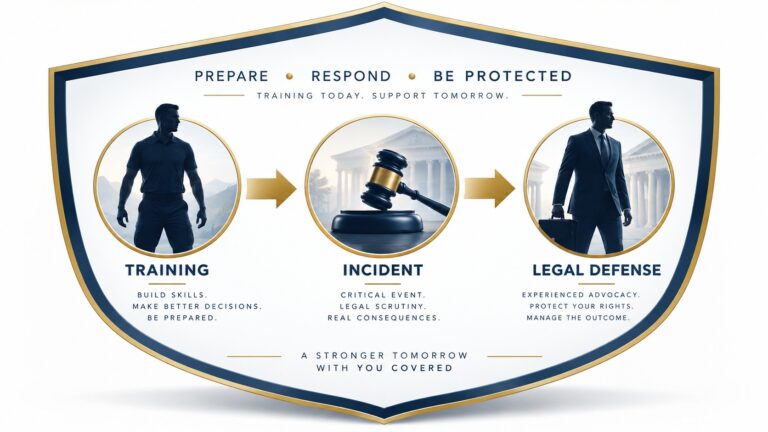
You’ll face criminal and civil legal scrutiny for every shot you fire. Understanding use-of-force laws isn’t optional. You need justification for drawing your weapon, let alone firing it. The legal standard is whether a reasonable person would believe they faced imminent threat of death or serious bodily harm.
Three elements must exist: ability, opportunity, and intent. The attacker must have the ability to cause you serious harm (weapon, size advantage, multiple attackers). They must have the opportunity (close enough to actually hurt you). They must demonstrate intent through actions or words. All three must be present to justify lethal force.
Duty to retreat varies by jurisdiction. Some states require you to escape if possible before using lethal force. Others have stand-your-ground laws. Know your local laws. Ignorance won’t protect you in court.
After any defensive shooting, expect to be arrested and questioned. Understand your rights. You’ll be operating under extreme stress, potentially injured, certainly shaken. Have a plan: “I want to cooperate, but I need to speak with my attorney first.” Describe threats and evidence officers should preserve, but don’t give detailed statements without legal counsel. What you say in those first hours can determine whether you face charges.
Training: Building Skills Before You Need Them
Hope is not a strategy. Luck is not a plan.
Effective training builds unconscious competence. Your body needs to execute techniques automatically when your conscious mind is overwhelmed. This requires repetition—thousands of repetitions—until actions become muscle memory.
Dry fire practice is essential. You can practice draw strokes, trigger control, sight acquisition, and malfunction drills at home with an unloaded weapon. Always verify your gun is unloaded before dry fire. Remove all ammunition from the room. Check the chamber three times. This practice is free, effective, and builds fundamental skills.
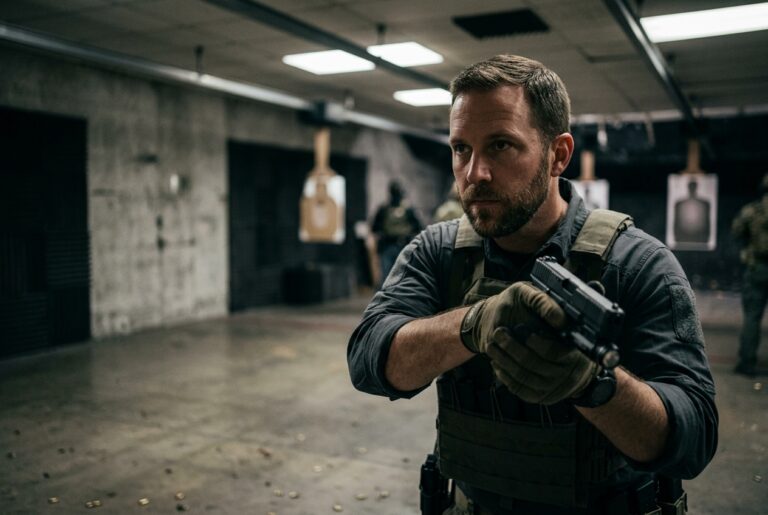
Live fire training should progress from fundamentals to stress inoculation. Start with static marksmanship. Add movement. Add time pressure. Add complex decisions. Eventually, you need force-on-force training with simulated ammunition to experience decision-making under realistic stress. Nothing else truly prepares you for the shock of being shot at.
Seek professional instruction. A qualified instructor identifies bad habits you don’t see, pushes you beyond your comfort zone, and teaches techniques proven in actual conflicts. Don’t learn gunfighting from YouTube alone.
Physical fitness matters. Gunfights are physically demanding. Your heart rate spikes to 175+ beats per minute. You might sprint to cover. You might fight hand-to-hand. You might need to move wounded people. Cardiovascular fitness, strength, and flexibility all contribute to survival.
Aftermath: Surviving the Immediate Post-Fight Period
The shooting stopped. You’re alive. Now what?
First priority: ensure the threat is actually neutralized. Don’t approach the downed attacker. Keep your weapon ready. Watch for additional threats—attackers often work in pairs or groups.
Call 911 immediately. Identify yourself as the victim. State your location. Request police and medical. When police arrive, you’ll likely be treated as a threat initially. This is normal. Keep your hands visible. Follow all commands immediately. Don’t point your weapon at officers. Don’t make sudden movements.
Holster your weapon before police arrive if possible and safe to do so. A gun in your hand when police roll up creates a dangerous situation. Officers arriving on scene don’t know who’s the victim and who’s the perpetrator.
Expect severe psychological reactions. Tunnel vision, time distortion, auditory exclusion, and memory gaps are normal during and after lethal force encounters. You might not remember how many shots you fired. You might not remember entire portions of the event. This isn’t weakness—it’s how human brains process extreme trauma.
Seek counseling after any defensive shooting. Killing someone, even in justifiable self-defense, creates psychological trauma that requires professional processing. PTSD symptoms can develop weeks or months later. Get help early.
Equipment Considerations: What You Carry Matters
Your equipment must work when your life depends on it.
Choose proven firearms from reputable manufacturers. This isn’t the time for exotic calibers or untested designs. Your defensive weapon should be 100% reliable with your chosen ammunition. Reliability trumps capacity, features, and looks. A gun that jams is a paperweight.
Carry spare ammunition. Magazine failures happen. Long fights happen. A reload can save your life. Keep at least one spare magazine on your person.
Quality holsters matter. Your holster must retain the weapon securely but allow a fast, consistent draw. It must protect the trigger to prevent negligent discharges. Cheap holsters get people killed.
Consider a flashlight essential equipment. Most criminal attacks happen in low light or darkness. You need to positively identify threats before shooting. A weapon-mounted light or handheld tactical light isn’t tactical cosplay—it’s a critical tool for target identification.
Medical equipment saves lives. A tourniquet, pressure bandages, and hemostatic gauze treat gunshot wounds in those critical minutes before EMS arrives. You might need to treat yourself or others. Basic trauma care training is as important as shooting skills.
Your Path Forward: Preparation Over Panic
Gunfight survival isn’t about luck or being a faster draw. It’s about preparation, awareness, decision-making, and ruthless execution of fundamentals when everything goes wrong.
Start where you are. Get professional training. Practice regularly. Study real-world incidents to understand what actually happens in lethal force encounters—not Hollywood fantasies. Develop your tactical mindset. Understand local laws. Maintain your equipment. Stay physically fit.
The fight you survive is the one you prepared for long before it happened. Nobody rises to the occasion under life-threatening stress. You fall to the level of your training. Make that training count.
Every person who carries a weapon for self-defense has a responsibility to develop real competence with that weapon. Buying a gun doesn’t make you prepared any more than buying a guitar makes you a musician. Put in the work. Your life—and the lives of others around you—depend on it.
About the Author