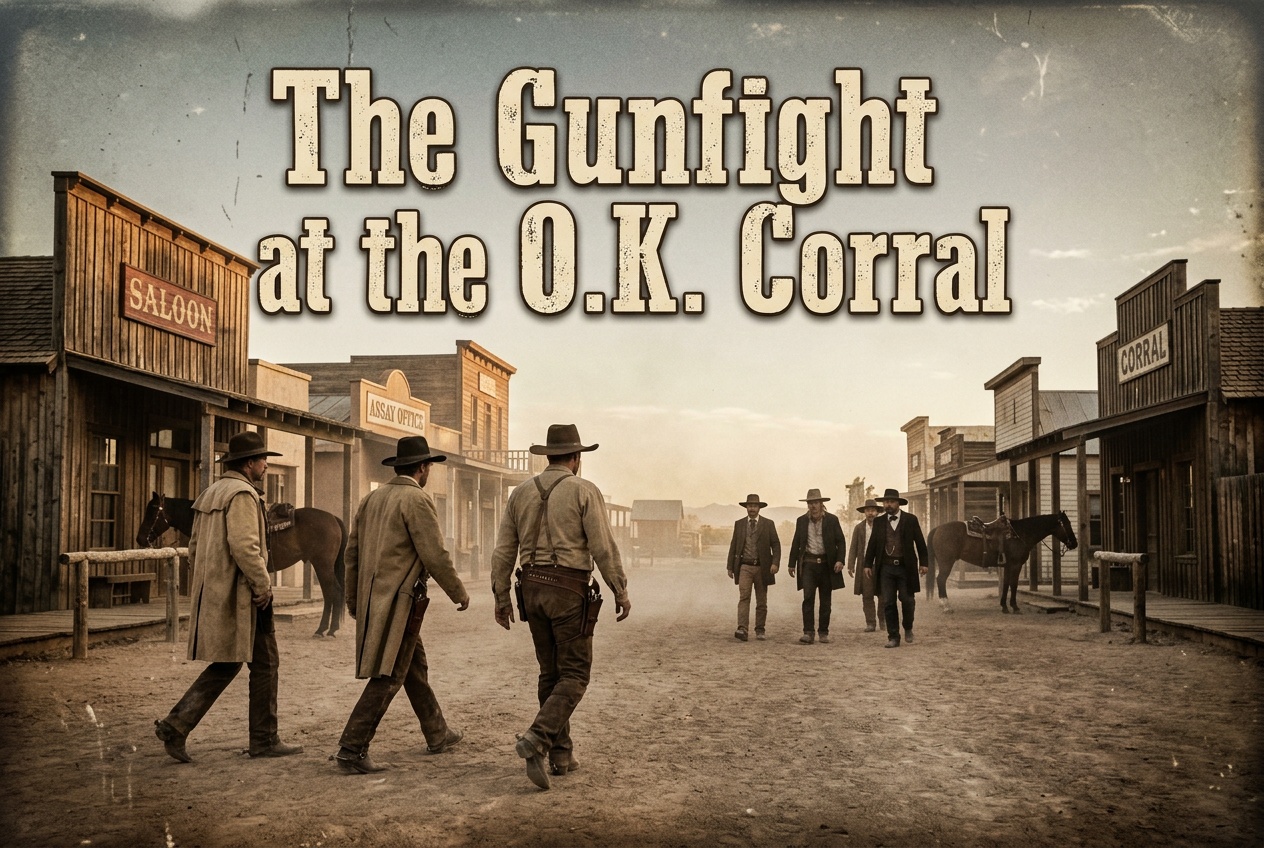
TL;DR: The gunfight at the O.K. Corral happened on October 26, 1881, in Tombstone, Arizona Territory. It lasted roughly 30 seconds. Three men died: Tom McLaury, Frank McLaury, and Billy Clanton. Three more were wounded: Virgil Earp, Morgan Earp, and Doc Holliday. Wyatt Earp walked away untouched. Despite the name, the actual shootout did not take place inside the O.K. Corral but in a vacant lot on Fremont Street next to Fly’s boarding house. The story has been told a thousand ways, most of them wrong. Here’s what actually happened.
If you’re a gun enthusiast, a self-defense student, or just someone fascinated by how a 30-second confrontation became American legend, this is the tactical and historical breakdown you want. The famous gunfight is more interesting than the movies, and the real lessons matter more than the myth.
What Is the True Story of the Gunfight at the OK Corral?
The true story is a lot messier than Hollywood made it. Tombstone in 1881 was a silver boomtown in Cochise County, Arizona Territory, and tensions had been building for months between the Earp brothers (Wyatt, Virgil, and Morgan) and a loose group of cattle rustlers and outlaws known as the Cowboys. The Cowboys included Ike Clanton, Billy Clanton, Frank McLaury, Tom McLaury, Billy Claiborne, and associates like Johnny Ringo and Curly Bill. They were involved in stolen cattle operations, stagecoach robberies, and other criminal activity outside of town. The Earps were lawmen. Virgil was the city marshal. Wyatt and Morgan held various deputy positions. Their friend Doc Holliday, a dentist turned gambler with a reputation for violence, was riding with them.
The night before the gunfight, Ike Clanton had been drinking heavily and making threats around Tombstone, telling anyone who would listen that he was going to kill the Earps and Doc Holliday. By the morning of October 26, 1881, Ike was still armed and still talking. Virgil pistol-whipped him and disarmed him, then released him. Hours later, Ike’s brother Billy and the McLaury brothers showed up in town. Word spread that the Cowboys were gathering, armed, in a vacant lot near the rear entrance of the O.K. Corral. Sheriff Johnny Behan tried to disarm the Cowboys but failed.
Around 3 PM, Virgil Earp deputized Wyatt, Morgan, and Doc Holliday and walked toward the lot to disarm the Cowboys. Virgil reportedly said something like “I want your guns.” What happened next took about 30 seconds. Roughly 30 shots were fired at close range, often less than 10 feet apart. Frank McLaury, Tom McLaury, and Billy Clanton were killed. Ike Clanton ran when shots were fired and survived. Billy Claiborne also fled. Virgil was hit in the leg, Morgan took a round across his shoulders, and Doc Holliday was grazed by a bullet. Wyatt Earp was the only man on either side to walk out untouched.
Where Did the Gunfight Actually Take Place?
This is one of the most common misconceptions about the gunfight at the O.K. Corral. The actual shootout did not happen inside the O.K. Corral itself. It happened in a narrow vacant lot on Fremont Street between Fly’s boarding house and a nearby building, roughly six doors west of the rear entrance to the corral. The corral itself was a livestock pen and stable. The fight occurred outside it. The name stuck partly because the Tombstone Epitaph and other early newspapers used “O.K. Corral” as a general location reference, and partly because it sounded better than “Gunfight in the Vacant Lot Next to Fly’s.”
The actual location was tight quarters. The lot was about 15 to 20 feet wide. When the Earps and Holliday arrived facing the Clantons and McLaurys, the two groups were standing within point-blank revolver range of each other. There was no cinematic walk-down, no slow draw, no quiet street showdown. It was a chaotic, close-range gunfight where everyone fired almost simultaneously and three men died in less time than it takes to read this paragraph.
How Many Died in the Gunfight at the OK Corral?
Three men died in the gunfight at the O.K. Corral. Frank McLaury was shot by Doc Holliday and Wyatt Earp, taking a round to the head and another to the body. Tom McLaury was hit by a shotgun blast from Doc Holliday and died from massive trauma. Billy Clanton was hit multiple times and died on the spot. Three more were wounded: Virgil Earp took a round to the calf, Morgan Earp took a bullet across his shoulder blades that nearly severed his spine, and Doc Holliday was grazed on the hip. Wyatt Earp was the only participant who came out without a scratch.
The death toll was small by frontier standards but the publicity was enormous. The Tombstone Epitaph ran detailed coverage. National papers picked up the story. Within weeks, the gunfight was being talked about across the United States. Three dead in 30 seconds, with a city marshal, his deputized brothers, and a dentist on one side, and a group of suspected cattle rustlers on the other, made for the kind of frontier morality play America couldn’t get enough of.
Did Doc Holliday Really Save Wyatt Earp’s Life?
The claim that Doc Holliday saved Wyatt Earp’s life at the O.K. Corral is partly legend, partly truth, depending on which moment you’re talking about. During the actual gunfight, Wyatt and Doc Holliday were fighting back to back at one point, and Doc’s shotgun blast that killed Tom McLaury came at a moment when McLaury was reaching for his rifle. If McLaury had gotten that rifle into action, the math could have gone differently for the Earps. So in that sense, yes, Doc Holliday’s quick action protected Wyatt and the others.
The bigger life-saving moment came later. After Morgan Earp was assassinated in March 1882, Wyatt launched what became known as the Earp Vendetta Ride, hunting down the Cowboys he believed responsible. Doc Holliday rode with him for the entire campaign despite being seriously ill with tuberculosis. There are at least two documented incidents during that ride where Doc’s actions, including reportedly killing Curly Bill in an ambush, kept Wyatt alive when he was outnumbered. Wyatt and Doc Holliday’s friendship was real, and Doc earned the loyalty Wyatt showed him for the rest of his life. Wyatt later said that Doc was the most loyal friend he ever had.
How Long Did Morgan Earp Live After Being Shot?
Morgan Earp was wounded in the gunfight at the O.K. Corral on October 26, 1881, but his wound was not fatal. He lived for another five months. On March 18, 1882, while playing pool at Campbell and Hatch’s Saloon in Tombstone, Morgan was shot through a glass door from outside. The bullet tore through his spine and exited the front of his body. He died within an hour, with Wyatt by his side. The killers were never officially convicted, but the prevailing belief was that the assassination was carried out by Cowboys avenging Frank and Billy. The killing of Morgan Earp is what triggered the Earp Vendetta Ride, during which Wyatt and Doc Holliday hunted down and killed several men they believed responsible.
So the timeline is precise. Morgan survived the famous gunfight by exactly 143 days. He was 30 years old when he died.
Were the Earps Found Guilty?
No, the Earps and Doc Holliday were not found guilty. After the gunfight, Ike Clanton filed murder charges against Wyatt, Virgil, Morgan, and Doc Holliday. The case went before Justice Wells Spicer for a preliminary hearing that lasted about a month, with extensive testimony from witnesses on both sides. Sheriff Johnny Behan testified for the prosecution and gave an account favorable to the Cowboys. Witnesses for the defense, including some neutral parties, supported the Earps’ version that the Cowboys had refused to disarm and that Billy Clanton and Frank McLaury had drawn first.
On November 30, 1881, Spicer ruled that there was insufficient evidence to send the case to a grand jury. He found that Virgil Earp had acted within his authority as city marshal in attempting to disarm the Cowboys, and that the Earps and Holliday had acted in self-defense once the Cowboys resisted. The ruling effectively cleared all four men. Public opinion in Tombstone was deeply split. The mining community generally sided with the Earps. The ranching community sided with the Cowboys. That division would fuel the violence that followed for the next several months.
Is the Shootout at the OK Corral a True Story?
Yes, the shootout at the O.K. Corral is absolutely a true story. It happened on October 26, 1881, was covered extensively in contemporary newspapers including the Tombstone Epitaph, was the subject of a month-long legal hearing under Justice Wells Spicer, and produced extensive court records, witness testimony, and physical evidence that survives today. The participants were real men. The dead were buried in Boot Hill Cemetery in Tombstone, where their graves can still be visited. The Tombstone drawing of the period and contemporary photographs show the location and the participants. There is no serious historical dispute that the gunfight happened.
What is disputed is the interpretation. Were the Earps heroic lawmen enforcing the rule of law against criminal cowboys? Were they corrupt frontier opportunists settling personal grudges under the color of authority? Were the Clantons and McLaurys hardened outlaws or just rough ranchers who refused to be disarmed in their own town? Different historians answer those questions differently. The facts of the shootout are settled. The morality is still being argued 145 years later.
How Did Hollywood Portray the Gunfight at the OK Corral?
Hollywood has portrayed the gunfight at the O.K. Corral more times than just about any other Western event. The most famous version is the 1957 film “Gunfight at the O.K. Corral” directed by John Sturges, starring Burt Lancaster as Wyatt Earp and Kirk Douglas as Doc Holliday. The film also featured Jo Van Fleet and a great cast of supporting players. Lancaster and Douglas turned the story into a Western movie classic, though the actual gunfight portrayal in the film bears only loose resemblance to what really happened. The real fight was 30 seconds. The Hollywood version was an extended set piece. The real lot was tight and ugly. The film’s lot was wide and cinematic.
Other portrayals include “My Darling Clementine” (1946) directed by John Ford, “Hour of the Gun” (1967) also by John Sturges, “Tombstone” (1993) starring Kurt Russell as Wyatt and Val Kilmer as Doc Holliday in what many consider the best portrayal of the era, and “Wyatt Earp” (1994) starring Kevin Costner. Reenactments are still performed daily in Tombstone, Arizona, drawing tourists from around the world. The frontier marshal myth has outlived the actual frontier by more than a century.
What Are the Tactical Lessons From the Gunfight?
For self-defense students and gun enthusiasts, the gunfight at the O.K. Corral offers some hard-earned lessons that still apply today. First, distance was minimal. The combatants were within 10 feet of each other when shots were fired. That’s typical of real gunfights, not the long-range duels of Hollywood imagination. Most modern defensive shootings happen at similar ranges. Train accordingly.
Second, accuracy under stress was poor on both sides. Roughly 30 shots were fired at close range and only a fraction connected. Even experienced shooters like Wyatt and Doc Holliday missed multiple times. This is consistent with modern police gunfight statistics where hit rates often hover around 20 percent. Practice doesn’t make perfect, but it makes you less terrible than the average. Third, the fight was over before most of the participants understood what had happened. Thirty seconds. Three dead. Three wounded. That’s the timeline of real violence. If you carry a weapon for self-defense, train for that timeline, not the slow-motion Hollywood version.
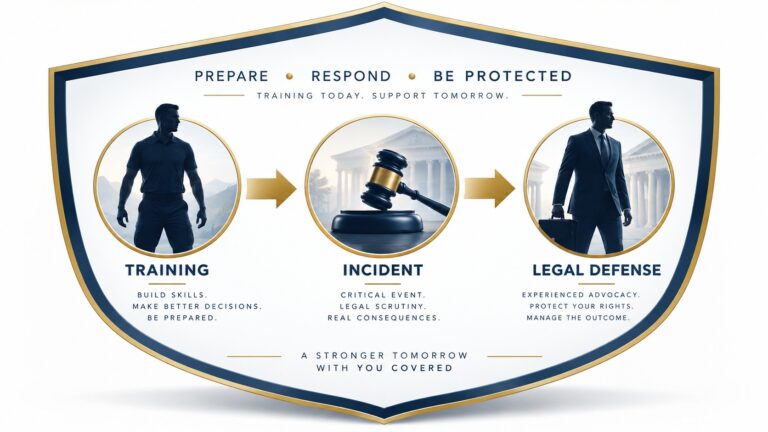
Fourth, the legal aftermath was as dangerous as the fight itself. The Earps faced a month-long legal proceeding that nearly cost them their freedom. Even when you’re legally justified, a defensive shooting in modern America comes with massive legal, financial, and social consequences. Be ready for that fight too.
What Happened After the Gunfight?
The aftermath of the famous gunfight was bloodier than the fight itself. In December 1881, Virgil Earp was ambushed and shot, leaving him with a permanently maimed arm. In March 1882, Morgan Earp was assassinated in the saloon. Wyatt Earp, his remaining brothers, and Doc Holliday then launched the Earp Vendetta Ride, hunting down and killing several men they believed responsible for the attacks. Wyatt and Doc left Tombstone and the territory entirely after the vendetta, eventually heading to Colorado and beyond. None of them ever returned to Tombstone to live.
Wyatt Earp lived until 1929, dying in Los Angeles at the age of 80. Doc Holliday died of tuberculosis in Glenwood Springs, Colorado, in 1887, just six years after the gunfight. Ike Clanton, who ran when shots were fired and survived the gunfight, was killed by a deputy in 1887. Sheriff Johnny Behan went on to various political and administrative positions. Tombstone itself eventually faded as the silver mines played out, and today the town survives largely on the tourism generated by the gunfight that defined it.
Why the Story Still Matters
The gunfight at the O.K. Corral has endured because it captures something essential about American mythology. Lawmen and outlaws. Family and friendship. Loyalty and revenge. Quick violence and long consequences. The fact that the real story is messier than the legend doesn’t make it less interesting. It makes it more interesting. Real men with real flaws made decisions in real time on a dusty street in 1881, and what happened in that 30 seconds has been argued about ever since. That’s the kind of story that doesn’t fade.
For modern readers, the gunfight is also a reminder that violence rarely looks like the movies. It’s fast, ugly, confusing, and often ambiguous in its aftermath. The Earps and Doc Holliday went into that vacant lot expecting a disarm and walked out as the most famous gunfighters in American history. None of them planned that. None of them controlled that. They just lived through it.
Key Takeways
- The gunfight at the O.K. Corral happened on October 26, 1881 in Tombstone, Arizona Territory, and lasted approximately 30 seconds
- The actual shootout did not take place inside the O.K. Corral but in a vacant lot on Fremont Street near Fly’s boarding house
- Three men died: Tom McLaury, Frank McLaury, and Billy Clanton. Three were wounded: Virgil Earp, Morgan Earp, and Doc Holliday. Wyatt Earp was the only participant unhurt
- Roughly 30 shots were fired at close range, often less than 10 feet between combatants
- The Earps and Doc Holliday were cleared by Justice Wells Spicer in November 1881 after a month-long preliminary hearing
- Doc Holliday’s shotgun blast killed Tom McLaury and likely prevented additional Earp casualties
- Morgan Earp survived the gunfight by 143 days before being assassinated in a Tombstone saloon on March 18, 1882
- The Earp Vendetta Ride followed, with Wyatt and Doc Holliday hunting down those they believed responsible for the attacks on Virgil and Morgan
- The 1957 film starring Burt Lancaster and Kirk Douglas is the most famous Hollywood portrayal, though “Tombstone” (1993) is often considered more accurate
- The fight is fully documented in historical record, including the Tombstone Epitaph coverage and the Spicer hearing transcripts
- Modern self-defense lessons from the gunfight include the realities of close-range violence, the speed of real gunfights, and the legal aftermath that follows even justified shootings
About the Author